HANDEP - sustainable and responsible mindset
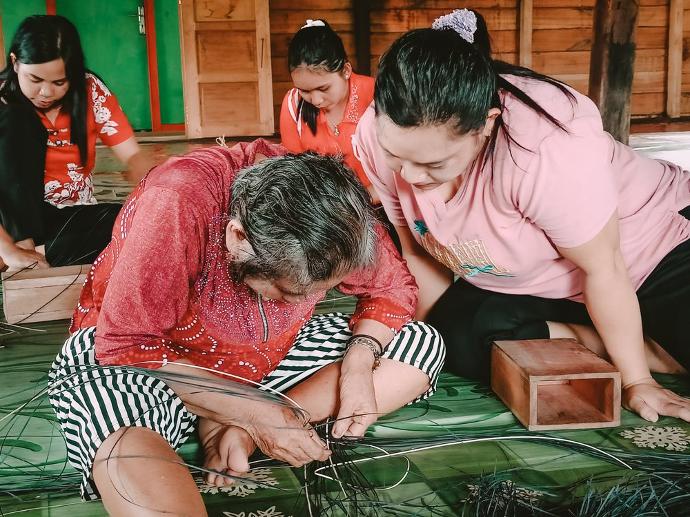
Arts and crafts in Central Kalimanta are not only an expression of artistic skills, but also a means of preserving cultural identity and traditions. Many of these crafts are passed down from generation to generation and are an important part of the cultural heritage. The raw material is grown and harvested by farmers, dyed with natural materials by dyers, artfully woven by weavers and lovingly crafted by decorators before finally reaching the end consumer.
Die fortschreitende Globalisierung bringt eine Vielzahl von Problemen mit sich. Die Abholzung der Wälder schreitet voran, indigene Völker werden aus ihren angestammten Gebieten vertrieben und traditionelle Praktiken gehen nach und nach verloren. Der Gründer von HANDEP - Randi Julian Miranda - selber ein stolzer Dayak der in Kalimanta (indonesisch Borneo) geboren und aufgewachsen ist erlebt seit jeher, welchen Herausforderungen die indigenen Völker dieser Erde gegenüber stehen. Er ist überzeugt, dass indigene Gemeinschaften an der Spitze stehen um den Klimawandel zu bekämpfen. Deshalb sollen sie in der Lage sein sich an den Entscheidungen, die ihr Leben betreffen, teilhaben zu können.
Aus dieser Überzeugung hat er 2019 das Unternehmen HANDEP This conviction led him to found the company HANDEP in 2019. His intention was to reconnect the indigenous Dayak people with their rich land and culture. To encourage them to utilize their resources and carry on their knowledge of the traditional craftsmanship of their ancestors. To grow together as a community and create a sustainable village economy.

Each bag is unique
Did you know that each pattern on HANDEP bags has its own origin and meaning?
Our model Lawangan is decorated with a Kelakai pattern. Kelakai is an edible fern species that grows abundantly in the lush landscapes of Borneo. This fern is often used in the traditional cuisine of the Dayak people.
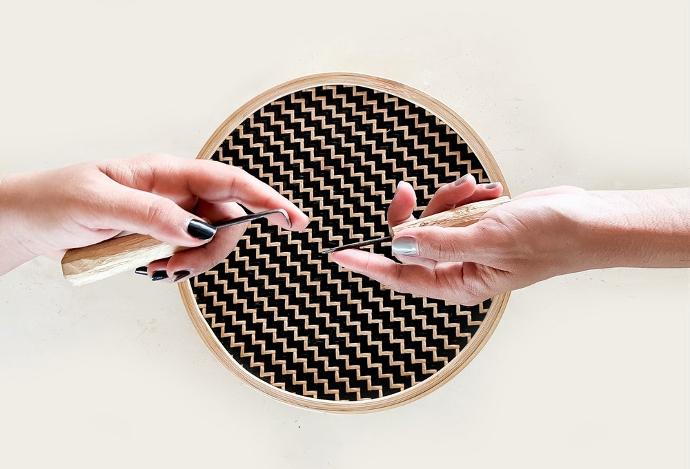
Or the model Katingan Canvas which is decorated with a salegegot pattern. The zigzag pattern imitates the interplay between the elements of wind and water. It represents the turbulence of a river and depicts a story of movement and change.
If you would like to know more about the available patterns and models, please contact us using the contact form.
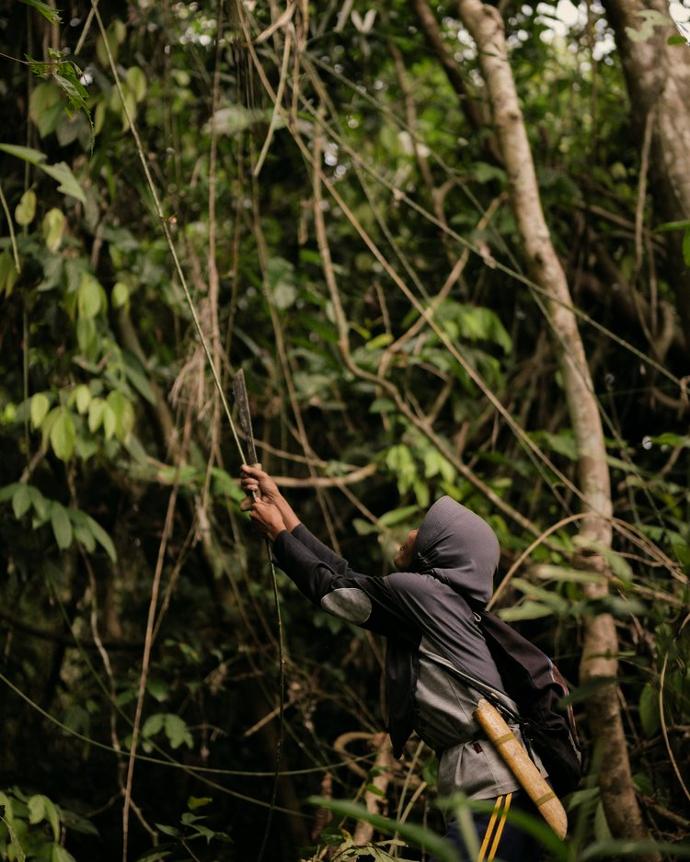
Rattan - a rapidly renewable raw material
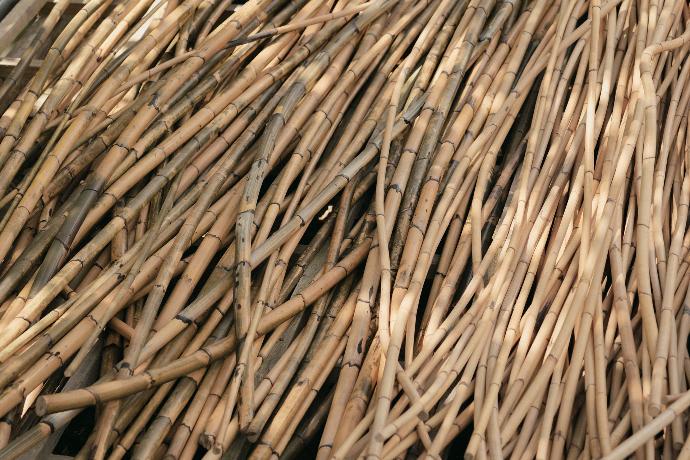
Mit dem weltweit zunehmenden Bewusstsein für eine nachhaltige Lebensweise wird Rattan als alternatives nachhaltiges Material zu Holz immer beliebter. Rattan wächst im Vergleich zu anderen Hölzern sehr schnell und benötigt weniger Zeit um erntereif zu sein. In nur 4-7 Jahren erneuert sich diese Kletterpalme komplett. Produkte aus Rattan sind zudem vollständig biologisch abbaubar.
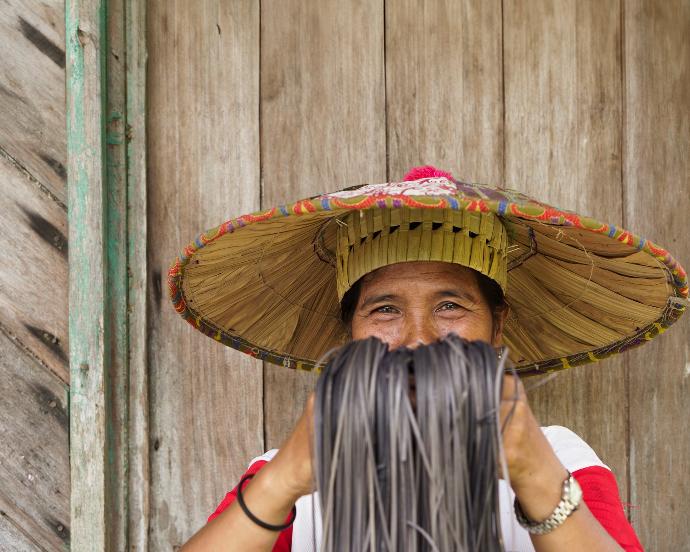
The indigenous Dayak people of Kalimantan have always relied heavily on the resources of the rainforest, especially rattan. They have a strong centuries-old, intergenerational relationship with rattan, which they use for handicrafts, furniture and building materials.
The material offers a warm and inviting look that comes into its own in both modern and traditional products. As a material, rattan is extremely robust and durable. At the same time, the material is very light.
The HANDEP vereinen damit alles wofür wir bei Faedah Collection stehen - Nachhaltigkeit, Langlebigkeit, Schönheit und Funktionalität auf harmonische Weise. Sie tragen so zu einem umweltbewussten und stilvollen Lebensstil bei.
Knowledge transfer - the pillar of an entire community
HANDEP supports the local indigenous community through training, workshops and the development of village infrastructure. In 2021, the Powering Artisans Scholarship was also launched. This is a program in which artisans have the opportunity to study in other villages in Indonesia and deepen their skills and knowledge.
Through regular workshops, knowledge about the art of weaving is passed on from older to younger generations. In this way, HANDEP makes a major contribution to securing a sustainable source of income for the local population and women in particular.
Dare (web competitions) are also organized every year to promote exchange between the partner villages.